Google Ads

Showing posts with label Chinese people. Show all posts

Friday, August 5, 2022

Venezuela reaffirmed its unrestricted adherence to the One China principle and the recognition of Taiwan as an inalienable part of China’s territory

Venezuela Condemns Pelosi Taiwan Trip, Reaffirms ‘One China’ Principle

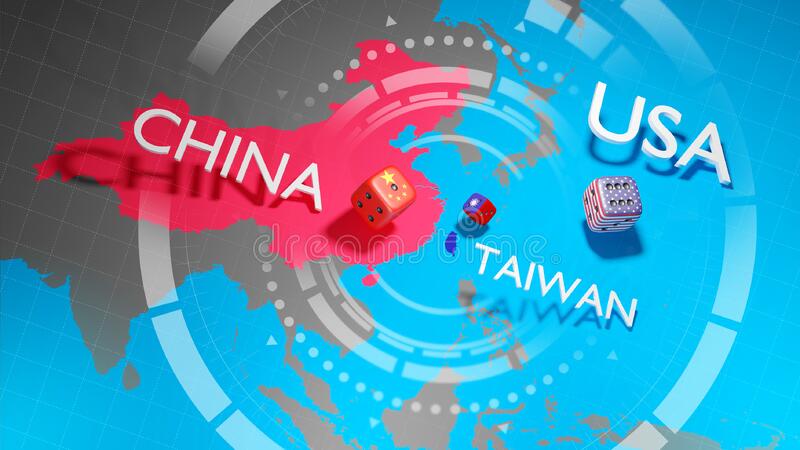
Taiwan Crisis

Caracas, August 03, 2022 (venezuelanalysis.com) – The Venezuelan Foreign Ministry has condemned US House of Representatives Speaker Nancy Pelosi's two-day visit to Taiwan, calling it a "direct provocation” and a “serious threat” to China's “sovereignty and territorial integrity.”

In a statement issued on Tuesday, Caracas alerted the international community about Washington’s “acts of interference” and recalled that the 1971 United Nations resolution recognizes the People's Republic of China (PRC) “as the true and only legitimate representative of the Chinese people.”

“We reaffirmed our unrestricted adherence to the One China principle and the recognition of Taiwan as an inalienable part of China’s territory,” reads the communique, which highlighted Caracas and Beijing’s strong ties of friendship, cooperation and solidarity as well as their “strategic partnership,” launched in 2001 under the Hugo Chávez government.

On Tuesday, Venezuelan President Nicolás Maduro and Foreign Affairs Minister Carlos Faría likewise celebrated 48 years of diplomatic relations with China in two separate meetings with Cai Wei, the Chinese Foreign Ministry's director for Latin America and the Caribbean.

Beijing has been a crucial Venezuelan ally since the arrival of Hugo Chávez, providing development loans while also becoming one of Caracas’ most important trade partners.  The Asian giant likewise offered key support in the fight against the Covid-19 pandemic.  The Maduro government has recently looked to court Chinese investors to boost the country’s economic recovery, including in recently approved Special Economic Zones.

Pelosi and a congressional delegation landed in Taiwan's capital of Taipei on Tuesday and met with its leading officials amid a tour of Asian countries.  The unannounced visit immediately sparked controversy, with Beijing denouncing “a serious violation of the One China principle and the provisions of the three China-US joint communiqués.”

“[The visit] seriously infringes upon China's sovereignty and territorial integrity. It gravely undermines peace and stability across the Taiwan Strait and sends a seriously wrong signal to the separatist forces in Taiwan,” condemned China's Ministry of Foreign Affairs in a long statement.

The Chinese government stressed that with Pelosi being a high-level authority in the Biden administration, “her visit to and activities in Taiwan, in whatever form and for whatever reason, is a major political provocation to upgrade US official exchanges with Taiwan.”

Following the House speaker's contentious trip, China’s Defense Ministry also announced it would conduct a series of “targeted military operations” around Taiwan to “defend national sovereignty and territorial integrity.”

Taiwan, which is roughly located 100 miles from the coast of southeast China, has been the cornerstone of a dispute between Beijing and Taipei’s US-backed separatist leaders.  The political, diplomatic and military standoff dates back to the 1927-1949 Chinese civil war between nationalist government forces and Mao Zedong's People's Liberation Army, the military branch of the Chinese Communist Party (CCP).

After the communists won in 1949, Zedong founded the People's Republic of China (PRC), including Taiwan.  However, the defeated nationalists fled to the island, renaming it the Republic of China (ROC) and turning it into their seat of government, leading to unsuccessful secessionist efforts.

Following Beijing's diplomatic efforts, on October 25, 1971, the United Nations General Assembly passed Resolution 2758 which recognized the People’s Republic of China as the only legitimate representative of China to the international community.  Since then, 181 countries have established diplomatic relations with Beijing based on the One China principle.

With China quickly becoming a rising power, in 1979 the Jimmy Carter administration broke ties with Taipei to establish diplomatic relations with Beijing and acknowledged the Chinese position that Taiwan is part of mainland China.  That same year, however, Washington also passed the “Taiwan Relations Act” to protect its commercial interests and sell arms to the breakaway island.

Although the White House has insisted that Washington’s position regarding the One China policy has not changed, in May President Joe Biden told the press that the US would defend Taiwan militarily in case of Chinese intervention. House Speaker Pelosi has now added fuel to the fire by disregarding Beijing’s protest over her visit which included a televised meeting with President Tsai Ing-wen.

“Our delegation came here to deliver an unequivocal message: America stands with Taiwan,” said Pelosi before leaving Taipei and heading to South Korea.

On Wednesday, Chinese State Councilor and Foreign Minister Wang Yi said Pelosi's Asian tour was a complete farce to cover for “heinous deeds of violating China's sovereignty under the guise of so-called democracy.”

Source 

Thursday, August 4, 2022

Cuba reaffirms its strict adherence to the “one China” principle and the acknowledgement of Taiwan as an inalienable part of the territory of that country

Cuba reaffirms its unreserved support to the “one China” principle


From 

Conflict China Taiwan
The Ministry of Foreign Affairs of the Republic of Cuba states its firm rejection to the actions aimed at harming the territorial integrity and sovereignty of the People’s Republic of China; condemns interference in its internal affairs, and emphasizes its concern over the increasing tensions and further deterioration of the situation concerning Taiwan as a direct result of the aggressive policy and high military presence of the United States and its allies in the Taiwan Strait, military contacts and regular sale of weapons, actions all that undermine peace and international and regional peace.      


New provocations, disguised as official contacts or high-level visits deliberately pose further dangers.


Cuba reaffirms its strict adherence to the “one China” principle and the acknowledgement of Taiwan as an inalienable part of the territory of that country.   


The United Nations General Assembly, in its resolution 2758 adopted on October 25, 1971, recognized the Government of the People’s Republic of China as the true and sole legitimate representative of the Chinese people.  Today, it has diplomatic relations with 181 countries based on the acknowledgement of the “one-China” principle.    


The purposes and principles of the United Nations Charter and International Law must be respected without selectivity or double standards.


China’s key role as a factor for stability and international balance cannot be disregarded, nor the relevance of its cooperation with developing countries with no political conditions attached.

Havana, August 2, 2022

Source 

Thursday, January 19, 2012

Chinese Ambassador to The Bahamas - Hu Shan on China’s economic work in 2012


China's Economic Work 2012


China’s economic work in 2012

Making progress while maintaining stability


By Hu Shan
Chinese Ambassador to The Bahamas


In recent months, many Bahamian friends have kept asking me about the future development situation of China’s economy, expecting me to introduce more of China’s economic policy through local media.  It so happened that China set the main tasks for its 2012 economic work last December, the tone of which was set as making progress while maintaining stability.   Following are some of the main contents.

China’s Central Economic Work Conference, concluded in Beijing on December 10, 2011, made an in-depth analysis on the major issues China must properly handle in 2012 and the ensuing period, and clearly pointed out the overall requirements, general guiding principles and main tasks of China’s economic work in 2012.  Concrete arrangements were laid out.

The conference holds the view that the world economy slowed down, the growth rate of international trade dropped, the international financial market intensively fluctuated, and risks of all sorts increased obviously in the past months in 2011.

Looking ahead, the overall situation of the world economy in 2012 will still be extremely complicated.  The instability and uncertainty of the world economy recovery is increasing.  China should pay more attention to both domestic and international situations, and figure out a due plan accordingly.  It should strengthen the awareness of risks and develop a full understanding of the challenges and opportunities brought by the international financial crisis.  From the perspectives of opening-up and reform as well as socialist construction of modernization, China should strengthen strategic planning and increase the capability of reaction by making best use of its advantages and bypassing its disadvantages.  It should continue to increase its comprehensive strength and international competence through exploiting favorable conditions while avoiding unfavorable ones.

China must play particularly well the basic work tone of maintaining stability while making progress when promoting its economic and social development in 2012.  ‘Stability’ means to maintain basically stable macroeconomic policies, relatively fast economic growth, stable consumer prices and social stability.  ‘Progress’ means to make new advances in transforming the economic development model, new breakthroughs in deepening reform and opening up and new achievements in improving people’s livelihood by seizing this strategically important development period for China’s development and putting it to good use.

The conference points out, under the circumstances of a complicated and rapidly changing international political and economic situation as well as the new situation and change in domestic economic development, China must continuously stick to the main theme of scientific development and the main policy direction of expediting transformation of its economic development model.  It must firmly keep the basic strategic point by expanding domestic demand, putting its emphasis on safeguarding and improving the life standards of the people, on accelerating the development of service sectors and on raising the proportion of the medium-income class.

China must firmly maintain the solid foundation of developing real economy.  The Chinese people must work hard to create an earnest and down-to-earth social atmosphere and get rich through diligent labor.  China must firmly stick to the dynamics of speeding up reform and renovation by seizing good opportunities to make some breakthroughs in leading fields and key segments.

The Chinese people should make special efforts to improve their abilities of initial innovation and continue to increase the abilities of epitomizing innovation and recreation through importing, absorbing and digesting foreign technologies.

They must firmly keep in mind the fundamental purpose of safeguarding and improving people’s livelihoods by allocating more financial budget, and earnestly carrying out some big and important livelihood-related events.  In doing so, they must lay stress on raising the inclusiveness of development.

The conference points out, 2011 was the first year of the 12th Five-Year period and the Chinese government and people implemented to the letter the 12th Five-Year Plan.  China enhanced and improved macroeconomic control and correctly handled the relations among stable and relatively fast economic development, economic structure adjustment and stagnation management.

China put more emphasis on solving prominent issues, consolidating and expanding its achievements in coping with international financial crisis.  China also made more efforts to enforce the orderly economic transformation from policy-stimulating to independent growth.  China’s national economy kept on moving towards the expected direction of macro-control, with a good momentum of relatively fast growth, stable price tendency, good returns, and improvement of people’s livelihoods.

In general, in 2011, China made new progress in socialist development in the fields of economy, politics, culture, society, conservation and party affairs, setting a favorable beginning for the 12th five-year period.

Given the extremely complicated domestic and international situations, no small effort was expended in obtaining such achievements.  That was the outcome of the dedication and hard work of the whole party and the whole nation in unity.  That was also the outcome of the unswerving efforts and tenacious striving of all the local governments and people from all walks of life.

The conference emphasizes that it must be consciously seen that, while the achievements were fully affirmed, currently the conflicts of interests and problems in China’s economic development remain prominent, say imbalanced, uncoordinated unharmonized development.

Moreover, there co-exists the heavy pressure of the decline in economic growth and the rising of commodity prices.  Some enterprises have difficulties in their production and management; the situation of energy conservation and emission reduction is still very severe; and there are potential risks that allow no negligence in the financial sector.

So the Chinese people must be sober-minded.  They should strengthen risk assessment, make contingency plans and take timely measures to effectively defuse all kinds of risks.

The conference clearly set the main tasks of China’s economic work for 2012.  China should:

1. Continue to strengthen and improve macroeconomic adjustment and control, and promote the economy to gain stable and relatively fast growth.

2. Be unremittingly committed to the work of agriculture, rural areas and farmers, and secure the supply of agricultural products.

3. Accelerate economic structural adjustment, and promote independent and coordinated economic development.  First, it should make great efforts to expand domestic demand.  Second, it should forcefully push forward the optimization and upgrading of industrial structure.  Third, it should put more efforts on energy conservation and emission reduction.  Fourth, it should spare no efforts to promote regional coordinated development.

4. Deepen reform in major areas and key segments, and uplift the level of opening to the outside world.

5. Make full efforts to safeguard and improve people’s livelihoods, strengthen and innovate social management.

The conference points out, in order to do a good job in the economic work in 2012, China must stick to the concept of overall planning and all-round considerations, and earnestly keep a good balance between objectives and tasks to achieve the overall objective of making progress while maintaining stability.

The Chinese government should better combine stable growth, price control, structure adjustment, livelihood improvement, reform implementation and harmony promotion.

‘Stable growth’ means to boost domestic demand while stabilizing foreign demand, to exert itself to overcome the impact brought about by all sorts of unstable and uncertain factors, promptly solve trendy and tendentious problems, and to keep stable economic growth.

‘Price control’ means to continue taking comprehensive measures to keep the general price level basically stable and prevent the price tendency from rebounding.

‘Structure adjustment’ means to bring the main theme into bold relief, permeate the main policy into the whole work, combine support and control accordingly, increase both quality and quantity of economic growth, and to strengthen economic coordination and sustainability.

‘Livelihood improvement’ means to place safeguarding and improving of livelihoods on a more outstanding position, concentrate efforts to solve urgent issues, and to do some tangible things that can be seen by the people and can benefit the people.

‘Reform implementation’ means to push forward reform with greater commitment and efforts, concentrate all efforts to solve systematic and structural contradictory problems that directly impact the long-term healthy economic development, obtain new breakthroughs in major areas and key links, and promote reform, development and harmony through opening-up.

‘Harmony promotion’ means to correctly handle the relations among reform, development and stability, actively and efficiently defuse all kinds of potential conflicts and risks, and promote social harmony and stability.

Jan 19, 2012

thenassauguardian