Google Ads

Showing posts with label Caribbean islands. Show all posts

Saturday, December 17, 2011

Our charming, peaceful Caribbean: Paradise temporarily lost


The Caribbean


By Horace Williams


Like a string of beautiful emeralds, our charming Caribbean islands mesmerizingly hang around the neck of the American continent.

Chiseled by British, French, Spanish and Dutch artisans, each gem became a uniquely precious diamond, or ruby, or prized pearl -- a true acme of perfection.

Our beautiful beaches were peaceful places, where majestic mountains magically rose out of the seductive sea.

Secluded swimming and snorkeling in the warm waters beneath the rugged waterfalls made the majesty of the oceans merge into the beauty of the beach's stunning but solitary stretch of soft sand.

This emerald gulf coast is a tropical paradise, where impressive waves are wonderfully woven into charming crystal whirlpools of welcoming warm water.


The whispering wind whipped our scanty clothing like a fluttering flag on a weathered flagpole, and we could detect the aroma of tonight's dinner lazily drifting towards us in the cool crisp evening air.

...But something was changing.

Yes, something was being altered.    Our senses were adjusting to change... not necessarily for the better... and we were accommodating them.  The evolution was slow but certain -- and steady.

We could feel it.

Our friends say they could see it.

The nation was touched by it.

The neighbours -- they could taste it, and our pets... they could sense it.

Yes it -- something -- was not right any longer.   In my veins; in my blood; in my sub-conscious, I just knew that we, as a people, had lost our peaceful virginity.   It was gone.   Taken -- no, stolen -- from us.   We were no longer the peaceful, innocent, cavalier, fun-loving people we once were.   The devil had arrived by sea and by air.   He had arrived in the guise of "progress," and his name was Lucifer.

He, and his relatives, had arrived each day, and we welcomed them.   They multiplied.   They were beginning to take over our lives. ....And we did not realize that we were slowly going down the highway of destruction.   The guns came with them, and the knives did too.   They were stealthily concealed in their luggage and the Customs officers were none the wiser... or were they?   Slowly, we were drifting into a long, lost land, and did not even realize we were miraculously moving.   God was speaking to us, and we did not listen.   His words fell on deaf ears while we were hustling for the almighty dollar.

Today a man was mercilessly killed and a woman was fatally shot... at close range.   Last month my sister was kidnapped, then murdered, her naked body found as it degenerated and disintegrated into manure for the hungry vegetation in the lonely forest.   I cannot remember the last week we did not have a brutal murder in our peaceful Caribbean.   I called up north, and I called down south, but the answer was the same.   Violence had overtaken the land.   My land.   Our land.   The gods wept, and the floods came, but we did not get the message.

It did not start this way though.   It was subtle.   It was faint and illusive.   It was inconspicuous, indirect, indistinct and insulated, but profound.   Half-truths and white-lies were told... but those, we just took for granted.   Lies continued to be told like they were nobody's business -- but they were your business, and they definitely were my business.   Rumours of banana boats not arriving and shipments suspended circulated, and the farmers were disheartened.

The earth shook, and thousands died.   Someone was trying to get our attention, but the signal was not received.   We did not heed.   We did not hear -- the warning.   Curfews were imposed, prisons were exposed, and a state of emergency was enforced.   We looked at the telly and decided to copy.  Lawlessness was the order of the day -- and the night.

Authority was disrespected.   Election results... disregarded.   Demonstrations, whether warranted or not, occurred.  Fire-trucks were overturned and police officers were assaulted.  Thank God, the law exercised restraint, but disorder ruled the day.   Missiles were hurled at peace officers and the state's Parliamentary gates were battered beyond belief. ...And blood flowed.

But all of that was not enough!   Fires were ignited and damage was caused.   We were told that more fires were on the way, and that other acts of incivility would certainly follow.   Then we heard it!  I didn't want to believe it.   That could not be true.   But it was!   Dem boys say that guerrilla warfare was coming to the land.   Men were shot in their homes; others were attacked, while jewelry was stolen.   Young and old disappeared -- kidnapped -- then their bodies found whenever... wherever.   Criminal gangs roamed the land and turned our slice of paradise into a brittle and broken battle zone.

Wiki leaked, and leaked, and leaked and told us about prime ministers and opposition leaders, some of which made us proud... and some had us hanging our heads in absolute shame.   In the courts, men were found guilty of lying.  Our system of decency was drastically deteriorating.  Defamation of character lawsuits were successful as the lies persisted, and my peaceful Caribbean seemed to be going to the dogs. ....And that was insulting to the dogs!

This culture of violence must not be encouraged, and something has to give.

...And it will, because we stood up against it.

We decided to do something about this sad, sick and sorry state of affairs.  We will fight back.  We must fight back.   We must join forces to combat this violence and crime.  This is totally unacceptable. We will turn back the hands of time!

From The Bahamas to Guyana, and Trinidad to Bermuda, we must unite to defeat this malady.   Success starts with the decision that "we are not going to take this anymore."   We are sick and tired -- of being sick and tired.

Let us join forces, put our heads together, and solve this problem for all of us.   The criminals must not win... we will take our beautiful, peaceful Caribbean back.

December 17, 2011

caribbeannewsnow

Monday, November 7, 2011

Haiti: Rebel daughter of Africa


Haiti


By Jean H Charles


I was in Cape Haitian over the weekend, en route to Grand River for the gédé celebration on November 1.   There, I was invited at the posh hotel of Cormier Beach to meet with a group of wholesale travel agents from Germany, Great Britain, Spain and the United States.   They were lamenting to the fact that their own governments are putting obstacles in the way of their goal of selling Haiti as a tourist destination by placing the country on the list of the most dangerous places to visit, while the reasons for such a classification are spurious at best, discriminatory at worst.


Haiti, as an emerging democracy, has no political prisoners; its people, with no clannish tradition, refuse to fight amongst themselves, while surviving with resilience in the most difficult economic situation.   Compared to other nations in the Caribbean and in Latin America, its crime rate is low, it has none of the at risk indices that plague the nations that comprise the so called pestiferous countries.   It includes Afghanistan, Somalia, Iraq, DR Congo, Syria, Libya (I am sure will be off the list soon) and Haiti.

Que vient faire Haïti dans cette galère?   It is the French translation of the English language term that cannot be printed in this essay.

When you are included in that league, the insurance companies refuse to provide the umbrella of protection for damages, injury and medical coverage.   The travel agents have both hands tied, unable to pour into Haiti the million travelers that cannot wait to visit the last vestiges of pre-industrialization, where the McDonalds and the K-Marts are not king and queen in a bland post modernization culture where Bergen Norway is undistinguished from Bergen New Jersey.

Haiti’s descent into hell started with a quarantine imposed on the young republic in 1806 by the third president of the United States, Thomas Jefferson.   In between there was gunboat diplomacy and plenty of ostracism from Europe and from the United States.   Closer to us Ronald Reagan, the president of the United States in 1987, told the tourist industry to avoid that country because AIDS is rampant and maybe endemic to the country.   Yet AIDS was brought into Haiti by Canadians and Americans who found a fertile niche in the country with young boys with parents too poor to provide them with education and sustenance.

As a plague when it is affixed on your back, the characterization is difficult to be removed, and the governments of the western countries blindly follow the lead of the United States.   As a self prophecy Haiti has been sinking since, into the abyss of renegade and predatory governments that were too corrupt to lead the proper fight to facilitate the removal of the country from the list of the most dangerous nations on earth.

Worse, one of its own governments invited the United Nations peacekeeping force to set up shop in the country justifying the alibi that the nation is at war.   Yet the only harm endured by any soldier of the United Nations in Haiti is the wearing of military fatigues that multiplies the centigrade temperature on the body by two from the year-round summer temperature.

In the chain of the Caribbean islands, Haiti occupies the pendant with pearls, gold and diamond that made that nation the reservoir of wealth for Europe in general, France in particular for three hundred years.   Why was that reservoir tarnished and stopped in the last two hundred years, when nation building took hold under the command of the Haitians?

It is a story of self flagellation of course but it is also a story of discrimination against a nation that for the rest of humanity dared to stop the world order of slavery of man by man.

The last manifestation of that discrimination is in the placing without proper justification of the Republic of Haiti in the list of one of the most dangerous place on earth to visit.   I have with the detached professional lens of a foreigner visited the four corners of the country.   I have found a nation and a people at peace with itself, labouring every day with meager buying and selling to send the children to school, to eat every day, one day at a time with no protection from and no security in a police presence, yet they are living as though the police presence was everywhere.

While in Cape Haitian, I heard a big commotion in the middle of the night, it was a large crowd yelling, “Baré! Baré!” -- Take hold, take hold!   They were in pursuit of a thief, the stronger ones holding the night intruder until the police arrived to take him to jail.   Haiti’s cultural background that has its roots in the fear of authority, the Catholic Church and the voodoo syncretism offers a natural barrier against hooliganism, criminality and social disruption.

I am in awe every day at two manifestations that would fray the patience and endurance of any other population. In the midst of the extreme misery of the large part of the people, they do not take up arms against their successive predatory governments and they do not succumb to desperation leading to suicide or pathological behaviours.

Even the earthquake of January 12, 2010, that destroyed life and limb on a large scale did not produce a nation in constant mourning unable to recoup but one that keeps moving forward in the struggle for daily survival.   The noblesse oblige attitude sort of national social security net that bonds the poor with the rich that was disrupted under the Lavalas regime is being replaced by an engaging president who believes hospitality for all must be the ultimate goal of its government.

Tourism is to the Caribbean what oil is to the Middle East. Haiti, well positioned in the Caribbean Sea, is unable to reap its share of the green gold bonanza because the Western nations have declared it should not do so!

Aside from good governance, Haiti needs no help or grants from the rest of the world, it needs the lifting of the embargo against tourism in the country.   It has a large population (10 million people), a young population, resilient and very creative that needs to be educated and oiled with the rudiments of sophistication.

Bill Clinton, the nemesis of Ronald Reagan, albeit not from the same party, the Cardinal Richelieu of Haiti imposed by the United Nations, has bread on the ground; he must undo the harm done to Haiti by Ronald Reagan!   He should start the worldwide campaign against the listing of Haiti as one of the most dangerous place on earth, starting with his own government, the United States of America!

November 7, 2011

caribbeannewsnow

Monday, October 4, 2010

The UN and the Caribbean - A hope misplaced

by Rebecca Theodore

Eradicating poverty is the greatest global challenge facing the world today. The statistical surge of pictures of poverty around the world is not only manifested as a gross form of over representation by the media and other crusading organizations, but also shows the way in which poverty acts as a stigmata for entertainment and the way in which realism govern images in the capitalist press.

According to UNICEF and World Health Organization statistics, every 3 seconds a child dies from hunger and preventable disease. Yet, while we revel in the repute of a scientific and technological age, with tremendous advances in modern medicine and billion of dollars spent on nuclear armaments, the UN under the umbrella of the MDG fuels the flame by internationally declaring that 2010 is a defining moment in their fight against poverty.

Rebecca Theodore was born on the north coast of the Caribbean island of Dominica and resides in Toronto Canada. A national security and political columnist, she holds a BA and MA in Philosophy. She can be reached at rebethd@aim.comIt is clear that not only is this an insult to one’s intelligence but in accepting a daylight saving time mentality by pushing the date forward to an additional five years to further give a distinct character to poverty, the UN defeats its purpose of serving as a forum to set a global agenda, far less a pursuit of a vigorous development agenda, or the deliverance of humanitarian assistance to improve living conditions and alleviate poverty to those in need.

It follows that if Millennium Development Goals are supposed to be a solid, visual depiction between the world’s major economic players, i.e. poor countries’ improvement of policies and governance and rich countries’ provision of resources; then this is nothing more that an inflated statement of intent because it is rhetoric such as this that continues to muster and produce the poor among us.

Examples are clearly seen in the activities of the World Bank, and United Nations Development Program (UNDP), whose material operations are a consequence of the venality of poor people in the world at large.

In the same way that rhetoric did not fill stomachs in Nazi Germany’s day because the only goal of persuasive speech was to conquer the masses -- any means to that end was good and any means that did not serve that end was bad -- overcoming this delusion and developing a human development program through education, health, water, sanitation and job creation to eradicate poverty, to lift the poorest out of their isolation so that they can prosper and their talents and productivity can be unleashed will generate diverse return in terms of economic growth and social stability.

Statistics indicate that as many as 100 million people have fallen below the poverty line since the financial crisis began. Therefore a worldwide demand of civil society of the commitment to increase official development assistance is an economically solid and morally sound proposition.

In this regard, Caribbean states are also vulnerable in the face of poverty as economic and political problems that one state faces individually are common to all Caribbean states.

It is clear that Caribbean islands are experiencing climate change more quickly and visibly than other nations. Compressed with the malady of food security, marine and coastal resources, dependence on foreign aid and markets for financial growth -- a problem that sees fluctuation on global markets at an alarming rate, and dependence on imports for food and energy, then it is evident that Caribbean nations will have high debt burdens, which leave them vulnerable to economic problems, sinking deeper into the abyss of poverty and dehumanizing living and working conditions.

Hence, it is time to consider our vulnerabilities as leveraged strength and seek diasporic unity in the battle against poverty because the UN is no longer an immediate saviour.

It must be seen that UN conferences as MDG produces nothing but strife and bickering in its pledge to solve the sufferings of humanity, for if its purpose is to help countries build and share their own solutions to challenge urgent development needs, supporting coalitions for change and connecting individuals and institutions so they can share knowledge, experience and resources, then considering the UN’s deplorable track record in Rwanda, Darfur and Congo, committing hundreds of sex crimes against the people they were sent to protect; and until recently in Haiti where incompetence and corruption reigns supreme with its entrustment of billions of dollars to stabilize the lives of the Haitian people allotted to the salary and luxurious upkeep of its own workers, the question lingers -- Is there cause for optimism in its reconstruction of the Caribbean and its environs in the fight to eradicate poverty?

caribbeannewsnow

Friday, August 20, 2010

Regionalism: The Caribbean prospective - Part 4

By D. Markie Spring
Turks and Caicos Islands:


Idyllic and liberating are the ways I’d describe every Caribbean nation that has gained its independence from European rule and governance. Hitherto, it has been twenty-five years since the last Caribbean nation disassociated itself from Britain.

However, some countries continued to be dependent upon Europe -- Britain, Netherlands and France -- with little political progress; hence, I recommend regionalism through political efforts.


The Caribbean

In the Caribbean we differ extensively within the political arena. This is evident through the failed West Indies Federation, which was established in 1958 and ended in 1962.

There are too many disparities amongst our nations; ranging from the bashment between the governments of St Vincent and the Grenadines and Barbados over the drug trade between the two nations.

Also, most dependent territories, with the exception of Montserrat, view citizens of the other Caribbean islands as less fortunate. The same can be said about The Bahamas, Antigua and Barbuda, and Barbados to a lesser extent. Other political challenges exist.


Conversely, Cuba maintained a Communist regime for more than forty years. Recently, the former president handed over power to his brother Raul Castro; politics in this corner of the region has become a family business. The Cuban Communist regime must realize that communism and socialism have failed in every government that has adopted these political nightmares.

Similarly, Haiti’s political environment has been contentious with a long history of oppression administered by dictators -- Francois Duvalier and then his son Jean-Claude Duvalier.

Arguably, conscientious and considerate are true descriptions of the way Barbados’ governments have perpetrated their governance of that nation. The governments there have always worked for the citizens and strived to industrialize the country; thereby, producing political stability at home. It is also true that Barbados has its own political disputes and rivalries, but not as devastating as other Caribbean islands.

In the meanwhile, some scholars and citizens alike argued for and against regionalizing the political arenas of the Caribbean. Those against argued that the region has diverse political structures ranging from a Communist regime to a Westminster-style parliamentary system. Those who support regionalism argued that these dissensions are superficial and only subvert commonalities, which exist amongst states.

It is time for us to benchmark other nations that have fully integrated their political system and learn from their progress.

Ideally, the European Union (EU) has instituted the European Council, which has often being describe as the “Supreme political authority,” has political roles in the negotiating changes in treaty and demarcates the policy agenda and strategies of the EU.

The United States, although somewhat different has sub-regions, which they called states and each state has it own government; yet constituted and regulated by the federal government.

In the US, there are Californians, Texans and New Yorkers; yet they are all Americans; In Europe there are the British, Romanians, and Germans; collectively, they are Europeans. In the region, we maintain our nationalities whether St Vincentians, Barbadians or Trinidadians, but as a regional unit we are West Indians.

It is time for politicians across the region to stop focusing exuberantly on self; rather they should discuss the issues affecting the region. Additionally, lack of interest and support from major states has crippled regionalism, coupled with the exclusion of the Dominican Republic and Haiti as members.

However, proponents of regionalism suggests that there are many benefits derived from strengthening the region’s governing bodies and political powers; creating efficiencies of scale and encouraging decentralization, amongst other benefits.

In Cuba’s case, I am not trying to hand down my political ideologies or those existing in the wider Caribbean; rather I am seeking to educate and solicit support from them to join the rest of the region in their quest for oneness through democracy. I realize that some scholars may disagree; however, there is real evidence that regionalism works.

August 18, 2010

Regionalism: The Caribbean prospective - Part 3

Thursday, July 29, 2010

Regionalism: The Caribbean prospective - Part 1

By D. Markie Spring
Turks and Caicos Islands:


It is evident that individual islands within our Caribbean region cannot stand alone; therefore we need regional integration into every aspect of our system.

However, it must be noted that there are some islands in the region that are doing well. The Bahamas, Barbados, the British, American, French and Netherlands overseas territories, states and departments have sustained economies; British and US Virgin Island, Cayman Islands, Turks and Caicos Islands, the ABC Islands, Guadeloupe and Martinique.


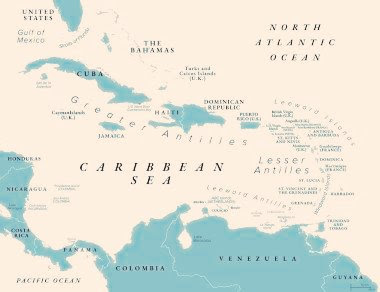
Caribbean Region


Conversely, Jamaica, Trinidad and Guyana have weakening economies, but they have sport teams that are competitive at the highest level. The Eastern Caribbean has semi-strong economies.

In my honest opinion, I believe that the Caribbean could be a force to be reckoned with; only if we unite all of our efforts. As a region we should come together and compete against the rest of the world.

Let me start this debate with sports. The Caribbean had regionalised its effort to build the most successful cricket team in the world. This had worked for many years until the West Indies cricket team was severed by a number of factors, including poor player selections. It was clear that, if the West Indies unites its other resources, we could accomplish many things. Why do we have so many individual sport teams?


We should also combine our efforts in tourism. Although some Caribbean nations greet millions of tourists per year, this is not a fraction of the amount of tourists that travel to other parts of the globe.

To illustrate this further, The Bahamas has more than a million tourists visiting its shores annually, when France alone has 74 million.

Many citizens across our region believe that only the Caribbean has lush valleys and mountains, and white sandy beaches with crystal clear waters. No, my people, the Philippines, Thailand and other far eastern Asian countries also boast these qualities.

We should adapt the business term called Comparative Advantage, where each country identifies its strongest attractions and builds on them -- from a regional prospective. This means that countries such as Turks and Caicos Islands should market its white sand beaches, while other countries like St Vincent and the Grenadines promotes its eco-tourism environment.

Furthermore, the Caribbean has to integrate its economy into a single economy, if it wants to create an economy that is recognised and competitive to the world. These days, individual markets are developing impeding problems. Our regional economies are too dependent upon each other.

There is, however, some strong evidence that a single economy would derive better results. Although the OECS countries are not fully integrated through economic efforts, its dollar has maintained comparative and competitive value for decades.

In this sense, it is safe to say that our regional leaders do not have that regional vision needed to push our nations forward. We cannot depend upon developed economies to assist us -- not in these difficult economic times.

Countries like the Bahamas, Turks and Caicos, BVI and USVI and the Cayman Islands often decline membership and their willingness to integrate. One thing these nations must realise, though, is that their economies are not diverse enough to stand on their own for much longer; therefore, we need to unite as one Caribbean.

Some leaders and citizens alike believe that the economies of too many islands are too weak to have successful integration. We must look at the European Union. The only countries in the EU that are economically vibrant are those located in Western Europe. To date, the EU combined maintains the world’s biggest GDP. Is this something to learn from?

We must direct our efforts away from Individualism and start thinking collectivism. All we are doing in the region is competing against each other and stealing the little we possess.

I realise that some readers may find this article contrary to their beliefs. However, with this criticism I am ready to debate my ideologies. I am a young professional who believes in oneness and that there is no form of survival without unity. In addition, I believe that people with different ideologies may be isolated and their lives might be spearheaded by political affiliations.

July 29, 2010

Regionalism: The Caribbean prospective - Part 2

caribbeannetnews

Wednesday, July 7, 2010

The British Caribbean and its history

By Franklyn W Knight:


The English-speaking population of the Caribbean represents less than 20 per cent of the conventionally defined region. That definition describes a Caribbean composed of the island chain from the Bahamas and the Dutch ABC islands of Aruba, Bonaire and Curaçao plus the mainland enclaves of Belize, Guyana and Suriname. Sometimes Bermuda is included although its 68,000 additional souls hardly change the proportion.

In the 1980s a new political definition became popular. It added the Central American states but omitted Cuba, displaying more the political bias of the United States of America rather than the reality of Caribbean affairs and the peculiar history of the region. The driving force behind the conventional definition of the Caribbean was a certain uniformity of history. The states of the conventional Caribbean were inordinately influenced by the interrelated sugar revolutions that convulsed the region between the 17th and the 19th centuries.

These sugar revolutions radically transformed the political, social, occupational, economic, demographic, and environmental structure of most of the Caribbean islands. Sugar was the principal driving force but it was not the only one and not all the islands succumbed to those revolutions. The massive importation of Africans - more than 10 million between 1518 and 1870 - made possible the transformation of the vast region between the northeast of Brazil, the Antilles, the Magdalena-Cauca river valleys of Colombia and a huge swath of the southern part of what today is called the United States of America. But African slavery affected every country in the Americas to some degree.

Slavery, of course, existed long before Christopher Columbus and his ill-fated caravels wandered into the Caribbean. Slaves constituted an integral part of Roman expansion and colonisation of most of Western Europe. The preferred slaves of Romans came from the region that today comprises Germany. But the word itself derives from the Slavic peoples who formed the greater proportion of people who were traded in the slave markets of the Mediterranean. Europeans continued to enslave one another until the middle of the 19th century, although mostly in Russia. And Muslim states enslaved captured Europeans in the Mediterranean until the Napoleonic Wars.

African and indigenous American peoples also enslaved one another. Throughout the continent of Africa, stronger states subordinated weaker states and subjected their conquered peoples to some form of slavery. Among other occupations, male slaves were employed as warriors or protectors of harems and religious sites. In Mexico a system of slavery called Tlacotli existed until the arrival of Hernán Cortés in 1521.

Slavery in the Americas reconstructed by the Europeans and their slaves finds no precedence anywhere else in the world. Neither in Europe, Africa nor among the indigenous societies of the Americas did the practice demonstrate the rigidity and suffocating mutually reinforcing cleavages developed after 1518. Only in the European American colonies were race and colour essential aspects of enslavement. Only in the Americas did slavery perform a vitally important economic function, assets that could independently generate wealth. The American slave society and the American slave-holding society were fundamentally different.

Nevertheless, the way the history of the Caribbean is taught, especially in the British Caribbean, leaves much to be desired. It tends to be excessively centred on the British Caribbean experience and neglects the integral connection with the non-Anglophone Caribbean or with the wider Americas.

To begin, not all Africans arrived in the Americas as merchandise. Several Hispanised Africans arrived with the Iberians in the first century of conquest and colonisation. Columbus recruited travel companions such as Juan Garrido and Pedro Alonso Niño from among the large free black population that lived in Andalucía, in cities from Málaga to Huelva. Nuflo de Olano who accompanied Vasco Nuñez de Balboa across the Isthmus of Panama was probably a bought African slave. Juan Valiente who accompanied Hernán Cortés to Mexico was described as black. So was Estebanico who wandered for 10 years with Alvar Nuñez Cabeza de Vaca from Florida to Mexico by way of Louisiana and Texas.

These free blacks, like their fellow adventurers, spawned a large, free, mixed population wherever they went. There were blacks and descendants of blacks all across the Americas who were never enslaved. They formed pockets of free population in cities, especially port cities like Havana, New Orleans, Vera Cruz, Porto Bello, Cartagena, Lima, Salvador de Bahia and Buenos Aires. And the town of El Cobre in eastern Cuba had a town council of freed and semi-free residents between 1680 and 1780.

During the 19th century another group of free Africans arrived along with Chinese and Indians from the Asian subcontinent to assist in the transition from slave labour to wage labour across the Caribbean. While smaller than the imported numbers of the commercial transatlantic slave trade, these immigrants are a part of the history that should not be neglected.

The massive importation of Africans was necessary because, unlike the narratives of Bartolomé de las Casas, the population of the Caribbean and circum-Caribbean in 1492 was not as large as the friar supposed. The Caribbean islands may have had a combined population of just about one million. That population could not support the increased labour demands of export-oriented plantations. The decline of the Native American population between 1500 and about 1650 was extremely complex and not the result of the single or simplistic explanation of Spanish genocide. Indeed, genocide is an inappropriate description for the decline of the Tainos of the Antilles.

But slavery is not the only theme in which moving the boundaries beyond time and space offers rewards. Hispaniola had a relatively early sugar complex - as early as 1512. The distillation of rum has a history preceding the English arrival in Barbados. Rum was distilled in the 13th century by Benedictine monks in Lebanon. Maroons were not really instrumental in the process of disintegration of the Caribbean slave society, and their role in the Haitian revolution seems highly exaggerated. Finally, the peasant society in the Caribbean goes back to the 16th century.

July 07, 2010

jamaicaobserver

Monday, February 15, 2010

Mission Possible: Restore Haiti

BRIDGETOWN, Barbados -- On February 14th (Valentine’s Day), the day the world typically spends pouring billions of dollars into merchants’ coffers in an effort to show how much they love a single individual in their lives; on that day of love, a Heart Mission of a different scale has sprung forth in the Caribbean islands.

The goal? To harness the unconditional love for Haiti residing in the Hearts of Caribbean people all across the globe, for a unified, long-term effort to RESTORE the Security, Dignity and Hope of the Haitian people.

The Water Of Life Inc., a Christian Health and Wellness company in Barbados, was preparing to introduce a new health-enhancing bottled water product to the Caribbean, when the 7.0 earthquake struck Haiti. So devastating was the impact upon Haiti, the management of The Water Of Life felt that it would not be appropriate to continue with their product launch as though nothing had happened. The company therefore resolved to embrace the biblical principle of Luke 6:38, using its new bottled water product as the cornerstone of a Caribbean-led, 7-year, global fundraising and restoration campaign for Haiti, dubbed The Caribbean Loves Haiti Restoration Campaign.

According to Peter Parris, Public Relations Consultant for The Water Of Life, “The company has made a firm commitment to donate 7 to 70% of the proceeds from all sales of its bottled water in the Caribbean to the Haiti Restoration Campaign Fund and urges other Caribbean businesses to follow suit, by joining the campaign and making their own commitment to donate a percentage of their sales to the campaign fund.”

To financially support the campaign, individuals and businesses alike simply purchase one or more bottles of the Water Of Life, the company’s bottled water brand. The larger the volume of bottled water each individual or business purchases, the larger the percentage of the sale the company will donate to the Campaign Fund, with 1 to 6 bottles purchased resulting in a 7% donation to the fund on the low end, while a 7000 bottle purchase or higher, will result in the maximum 70% donation to the campaign fund.

The new bottled water is said to be different from any other bottled water currently retailed in the Caribbean, being alkaline rather than neutral or acidic, being composed of much smaller water molecule clusters for optimal body hydration at the cellular level and being very rich in axtioxidants which neutralize the free radicals in the body that damage healthy cells. Those three qualities of this new bottled water, combine to promote significant health enhancement, which is the inspiration for the brand name “The Water Of Life”, taken from the book of Revelation.

A dedicated social networking site has been developed as the official campaign website, allowing the people of the Caribbean and friends of the region the world over, to register as official supporters of the campaign, whether that is as “Financial” supporters (preferred), or as “Moral” supporters, which requires no purchase. The website address is www.TheCaribbeanLovesHaiti.org.

David Clarke, Marketing Manager for The Water Of Life, revealed that, “… the campaign was developed as a multifaceted and individual-centric campaign, with lots of opportunities for the general public to get involved in a meaningful way, to help drive awareness of the campaign and encourage everyone to get on board as an individual or business supporter of the campaign.”

The campaign encompasses plans for a live concert recording of Caribbean artistes and a DVD documentary chronicling the development of the campaign and its various sub-projects.

Unemployed Caribbean citizens can also earn an income by becoming Official Campaign Canvassers, going around to corporate offices and homes to solicit financial support for the campaign via the purchase of the Water Of Life brand of bottled water.

According to Clarke, “The company’s bottled water product is currently only available for purchase in Barbados, but the company is actively pursuing strategic partnerships with entrepreneurs in 23 Caribbean countries, with a view to having its scientifically advanced bottled water produced and available for purchase in all 24 Caribbean countries by yearend.”

February 15, 2010

caribbeannetnews

Friday, November 20, 2009

Commonwealth in danger: Action needed in Trinidad

By Sir Ronald Sanders:

As the Commonwealth Heads of Government meeting is about to take place in Port-of-Spain, Trinidad and Tobago’s capital, there is not much hope among its member states that it will achieve anything more than declarations without the means to implement them.

Indeed, even more worryingly, there is a mood in some of the developed Commonwealth countries that the organisation no longer has relevance in the international community.

Sadly, even though the Commonwealth Summit is being held on the eve of the Copenhagen Conference on Climate Change, there is strong resistance from major capitals to any notion of a Commonwealth initiative on this issue.

I hope my information is incorrect, but it is being said in circles that should know that Canada is one of the countries that is opposed to any initiative being taken on climate change outside of what could be achieved in Copenhagen. And, the world now knows that already diluted declarations have been prepared for the Copenhagen conference and they are non-binding anyway.

If the information about Canada is true, it is much to be regretted, for small states, particularly those in the Caribbean, have long looked to Canada to champion their causes and to stand with them in the Commonwealth especially. In the past, Canada has not shirked this role, and it has not been to Canada’s disadvantage. By championing small states, Canada has been able to count small states in the legions of its support.

No other plurilateral organisation has served the interests of small states better than the Commonwealth over the last four decades. Of the now 52 member states, 32 are small with 12 of them from the Caribbean. Certainly, the G20, despite the membership of five Commonwealth countries – Australia, Britain, Canada, India and South Africa – can not purport to serve small states since not one small state is represented at the table, and, so far, no machinery has been put in place to formally ascertain their views, in advance of G20 meetings, on the global issues that affect them.

As the world has moved increasingly to globalisation and trade liberalisation, the majority of small states, which were from the very outset only marginally capable of economic survival, have found themselves overwhelmed by new challenges such as sea-level rise, drug trafficking and attendant high rates of crime, high migration of their best educated people, and a lack of capacity for negotiating the integration of their societies into larger trading blocs and the new global trading system. While bigger countries have similar problems, they have the resources and flexibility to address these problems, unlike the small states.

This is the context in which this CHOGM is being held. It suggests that the Commonwealth in tandem with the small states themselves should explore ways in which the imperilled societies of the majority of small states could become more viable and so serve their particular interests as well as those of the wider Commonwealth.

What should be the crucial issues? A priority should be Climate Change. The escalation of adverse weather related conditions, especially sea-level rise, challenge the very existence of several Commonwealth countries such as the Maldives, Kiribati, Marshall Islands, Tokelau and Tuvalu. In other cases, sea-level rise and flooding threaten agricultural production and trade for many states such as Guyana, Belize, Ghana, Tanzania and Bangladesh. Both stronger hurricanes and steady beach erosion also threaten tourism and agricultural production in several Caribbean islands. And, for all of the affected countries, the high costs involved in adaptation are simply unattainable on their own.

Why then not a Commonwealth initiative to do something tangible for the most vulnerable regardless of what happens at Copenhagen? Surely, the Commonwealth could resolve to mobilise resources from the World Bank and other organisations to put in place a programme for the countries whose very existence is threatened? If not, what do the leaders of these countries tell their people? What does the Commonwealth tell them? Is it that they must quite literally paddle their own canoe?

A second priority should be the impact of the global crisis on all Commonwealth countries and particularly what should be done for the smallest and most vulnerable economies. It was a welcome development to see the Secretary-General of the Caribbean Community and Common Market (CARICOM) Secretariat make the statement that CARICOM countries “have not seen any significant inflow for that (the US$1 trillion pledged to the IMF by the G20 countries), we have not heard or seen any significant changes in policies of the IMF as an example”. It is time for that kind of frank talk.

The Global crisis produced the G20 countries to replace the G7, which has controlled the world economy over the last sixty years, to stimulate global demand and supply, but there has been no accompanying measures for the smallest, most vulnerable countries for debt relief, new aid, and sustainable capital flows. It is right that these governments must devise policies that address these issues themselves, but it is also right that the international community should act to provide help.

Essentially small states have been left out in the cold with the IMF still the only mechanism to which they can turn – and no change, despite all the rhetoric, in the prescriptions of the IMF itself.

Yet, the capacity of governments of small Commonwealth countries to service debt that the IMF places as a priority is extremely difficult in conditions in which their main sources of trade and tourism revenues are in decline. The ratio of debt to GDP in several small Commonwealth countries paints the picture: St Kitts-Nevis 178%, Seychelles 151%, Jamaica 128%, Antigua and Barbuda 107%, Barbados 106%, Grenada 87%, Dominica 86%, Belize 80%, St Lucia 70%, Marshall islands 70% and St Vincent and the Grenadines 67%.

The Commonwealth should, at the very least, be considering how it can advance change in the World Bank and other financial institutions for helping small countries to restructure and repay both official and commercial debt on easy terms over the next decade.

Absent practical decisions of this kind, this CHOGM does run the risk of making the Commonwealth irrelevant even to the small states that place such tremendous importance in it. That would be sad for an organisation that retains great potential for serving the world’s interest for economic development, peace and democracy.

caribbeannetnews