Google Ads

Sunday, September 4, 2022

The benefits of digital transformation in the public sector

The post-implementation impact of digital transformation in Latin America


Digitalization improves people's lives by making it easier for them to access services


IDB finds digital services drive 74% savings for businesses and citizens of São Paulo city


Brazil is a leading country in digital transformation of the public sector

  • Brazilian municipality obtained a return of 27 reals for every real invested in digital transformation.
  • The study analyzed costs related to travel, wait times, shipping, human resources and other aspects.


Digital transformation in the public sector
A study conducted by the Inter-American Development Bank (IDB) based on data from the City of São Paulo, “Economic benefits of the digital transformation of public services (only in Spanish and Portuguese) found that each 1 real invested in digitalizing public services generated a return, or annual savings, of 27 reals to the public administration.

The study quantifying the benefits of digital transformation in the public sector concluded that digital transformation saved citizens and companies an average of 74% of the unit cost of public service request. For services for individuals only, the average reduction was 83%, while savings on services for companies were 67%.

For citizens and businesses, the study analyzed changes in the volume of requests, costs associated with travel, wait times, printing and mailing documents, and other aspects.

“The results of this study, which is among the first to assess the post-implementation impact of digital transformation in Latin America, prove expected outcomes: large savings for both citizens and government”, said IDB Representative in Brazil Morgan Doyle.

“In addition to reducing costs, digitalization improves people's lives by making it easier for them to access services.  Brazil stands out in the delivery of digital public services, and the IDB provides technical and financial resources so it can continue to pursue this path. Digitalization is a priority of Vision 2025, our blueprint for achieving a sustainable and inclusive economic recovery”, he added.

The researchers also analyzed the impact for government administration, considering costs related to human resources, physical space and investment in digitalization, among others, and they found an average drop of 40% in the unit cost of a service request, as well as saving of 50% on human resources who directly provide public services. Meanwhile, 19% less staff were needed to handle requests.  These changes gains from digitalization allow officials or employees to be reallocated to other activities, expanding government capacity.

Evidence-based knowledge generation

This study forms part of IDB’s efforts to support evidence-based knowledge generation and thus drive digitization in the public sector.  The bank also supports the Brazilian digital transformation with financial resources, such as the US$1 billion Brazil Mais Digital credit line, and through initiatives such as the Rede Gov.Br Platform, where it partners with the federal government to propel digital transformation in Brazilian municipal governments.

“Brazil is a leading country in digital transformation of the public sector, and this study shows that digitalization is key to increase the efficiency of public services”, according to Susana Cordeiro Guerra, Department Manager of Institutions for the Development of the IDB.

“At the IDB, we are committed to measuring the effectiveness of development and we hope that the lessons learned from the Brazilian experience will serve as an important input for the design of digital transformation strategies for other countries in the region.”

The results of the study are based on the digitalization of 15 service request processes, which make up 22% of the Municipality’s volume of digital services. These processes include unlocking passwords for individual micro-entrepreneurs, student transportation electronic tickets, parking permits for people with disabilities, and services linked to property taxes.

The analysis covers digitalization of the process of registering and directing the request to the appropriate person rather than performing the service itself, since some services have steps that must be face-to-face.

Digitalization is one of several channels in an integrated service delivery strategy that also considers groups who use digital media less, such as older people.  But it is extremely relevant: an IDB survey published in 2021 showed that the vast majority of the Brazilian population is ready for more and better digital services.  The survey found that 86% of Brazilians already feel adapted to online life and 95% have internet access from their cell phones.

Source 

Friday, August 26, 2022

First blockchain bonds have been successfully issued in Latin America and the Caribbean

Blockchain technology in Latin America and the Caribbean
The experience of carrying out the first bond issue using blockchain in Latin America and the Caribbean showcases the benefits of new decentralized technologies like blockchain, increasing the efficiency of the region’s capital market, including secondary markets.


IDB Group and Davivienda Bank Issue Colombia's First Blockchain Bond


The COP$110 million bond is a pilot project developed within the Financial Superintendence of Colombia’s “sandbox” for regulatory innovation


The IDB Group — comprised of the Inter-American Development Bank, IDB Invest and IDB Lab — and Colombia’s Davivienda Bank successfully issued the first blockchain bonds in Latin America and the Caribbean, as a pilot project within Colombia’s regulatory innovation sandbox. This pilot is the first of its kind in the region.

The processes of authorization, initial registration, and subsequent cancellation of the bond's registration in the National Registry of Securities and Issuers (RNVE), as well as the issue, trading, payment registration and compliance of the bond were done entirely on blockchain.  This approach allowed the banks to test ways to streamline the process and bring down its costs over a complete trading cycle on the Colombian capital market.

The bond, underwritten in its entirety by IDB Invest, had a total issue size of COP$110 million.  It was purchased by IDB Invest through a transaction conducted on the LACChain blockchain network, the infrastructure enabled by IDB Lab as a regional public good.  The pilot issue was carried out within "la Arenera" -- the sandbox of the Financial Superintendence of Colombia for testing innovations in financial technology (fintech).  IDB Group provided logistical and regulatory support for the project.

The Bank of the Republic of Colombia, which is the country’s central bank, and the Financial Superintendence of Colombia supervised the entire processes of the bond’s trading and compliance cycles.

“Davivienda has been one of the pioneers in working with blockchain technology in Colombia.  On this occasion, we are very pleased to announce the success of this first pilot, which we had the opportunity to develop together with such important partners.  The use of this technology transforms the role of actors in the securities market and the way in which bonds are issued and processed, resulting in a more transparent, rapid, and secure market.  This facilitates a reduction in the costs and complexity of issuance, allowing for more and more participants.  In this way, the success of this pilot represents an opportunity to continue working towards financial inclusion, in this instance in the stock market.”  Javier Suárez, President of Davivienda indicated.

“This goes to show how joint work by the IDB Group and countries’ public and private sectors can lead to innovation in the capital markets.  The pilot opens the door to fundamental changes to the existing axioms of securities trading and allows new models to be explored in the future to generate more financial inclusion.  We hope this experience can be replicated in similar pilot projects in Latin America and the Caribbean,” said Kelvin Suero, Acting Representative of the IDB Group in Colombia.

The pilot was spearheaded by a multidisciplinary team from Davivienda Bank, IDB Group, SFC, Bank of the Republic of Colombia and LACChain.  The team devised the financial, operational, technological, legal and regulatory solutions that made the pilot issue possible.  The experience of carrying out the first bond issue using blockchain in Latin America and the Caribbean showcases the benefits of new decentralized technologies like blockchain, increasing the efficiency of the region’s capital market, including secondary markets.  The project lays the groundwork for promoting and encouraging the use of new technologies in finance for Colombia.

About the Inter-American Development Bank

The Inter-American Development Bank is devoted to improving lives.  Established in 1959, the IDB is a leading source of long-term financing for economic, social, and institutional development in Latin America and the Caribbean. The IDB also conducts cutting-edge research and provides policy advice, technical assistance, and training to public and private sector clients throughout the region. Take our virtual tour.

About IDB Invest

IDB Invest a member of the IDB Group, is a multilateral development bank committed to promoting the economic development of its member countries in Latin America and the Caribbean through the private sector.  IDB Invest finances sustainable companies and projects to achieve financial results and maximize economic, social, and environmental development in the region.  With a portfolio of $14.8 billion in assets under management and 376 clients in 25 countries, IDB Invest provides innovative financial solutions and advisory services that meet the needs of its clients in a variety of industries.

About IDB Lab

IDB Lab is the innovation laboratory of the IDB Group, the main source of financing and knowledge for development to improve lives in Latin America and the Caribbean (LAC).  The purpose of IDB Lab is to drive innovation for inclusion in the region by mobilizing financing, knowledge, and connections to co-create solutions capable of transforming the lives of groups that are vulnerable due to economic, social, or environmental conditions.  Since 1993, IDB Lab has approved more than $2 billion in projects in 26 LAC countries, including investments in more than 90 venture capital funds.

About Davivienda

At Davivienda, we believe in a financial world that makes life simpler for people, communities, businesses and cities.  As a result, today we are a team of over 17,000 people in Colombia, Panama, Costa Rica, Honduras, El Salvador and Miami who innovate; invest in knowledge, talent, and technology; and partner to seek best practices around the world. We do all this to provide everyday solutions and exclusive opportunities to over 20.4 million customers, supporting financial inclusion and sustainable development. We are currently the second largest bank by gross loans in Colombia,* with a network of over 660 branches and nearly 2,700 ATMs in Colombia and at our international subsidiaries. We are proud to form part of Grupo Bolívar. *Financial Superintendence of Colombia, figures as of March 2022.

Source

Friday, August 19, 2022

Open letter to U.S. President Joe Biden demands the end to sanctions against Cuba

"Now more than ever, it’s time to write a new page in U.S.-Cuban relations..."


Open letter to Biden demands a new page in relations with Cuba


By  | internet@granma.cu

Help Cuba USA
A prominent group of U.S. politicians, intellectuals, scientists, clergymen, artists, musicians, leaders and activists sent an open letter to U.S. President Joe Biden to demand the end of sanctions against Cuba, especially at this difficult moment, when they are working for the recovery after the incident at the Matanzas Supertanker Base.

" Now more than ever, it’s time to write a new page in U.S.-Cuban relations.  We are making an urgent, public appeal to you to reject the cruel policies put into place by the Trump White House that have already created so much suffering among the Cuban people," they posted on the website www.letcubalive.org.

" U.S. sanctions fuel the fires that rage in Cuba!  Despite assurances by the U.S. Embassy in Havana that the law authorizes U.S. entities and organizations to provide disaster relief and response, Trump’s 243 sanctions continue to prevent urgently needed aid from arriving in Cuba," they add.

It stresses that the U.S. loses nothing by being a good neighbor and lifting the 243 sanctions that are preventing Cuba from recovering from this tragic moment.

" When your neighbor’s house is on fire, the normal human reaction is to rush next door to help.  To save lives.  To extinguish the flames.  Cuba is our neighbor.!  It is unconscionable, especially during a tragic accident, to block remittances and Cuba’s use of global financial institutions, given that access to dollars is necessary to import food and medicine," they said.

The Biden administration can do more than offer technical advice.  It can immediately remove Cuba from the List of State Sponsors of Terrorism, they demanded.

Signatories to the text include Roger Waters, Cornel West, Judith Butler, Noam Chomsky, Roxanne Dunbar-Ortiz, Jeremy Corbyn, Rev. Liz Theoharis, Seun Kuti, Vijay Prashad, among others such as Gail Walker, Brian Becker, Cindy Weisner, Claudia De la Cruz, David Adler, David Harvey, Gabriel Rockhill, Gerald Horne, Gina Belafonte, Helen Yaffe, Jennifer Ponce De Leon, Jeremy Corbyn, Jia Hong, Jodie Evans, Judith Butler, Manolo De Los Santos, Manu Karuka, Phillip Agnew, Robin D. G. Kelly, Ruth Wilson Gilmore, Salvatore Engel-Di Mauro, Seun Kuti and Yasemin Zahra.


Source

Sunday, August 14, 2022

Haiti is a failed State and a weak and vulnerable society which must be resolved by Haitians

Bringing peace to Haiti demands an absolutely critical step: there must be justice for the assassination of President Jovenel Moïse 


Democracy and Security in Haiti


Statement of the OAS General Secretariat on Haiti

  August 8, 2022


Democracy and Security

Haiti Crisis in the Americas
The institutional crisis that Haiti is experiencing right now is a direct result of the actions taken by the country's endogenous forces and by the international community.

The last 20 years of the international community's presence in Haiti has amounted to one of the worst and clearest failures implemented and executed within the framework of any international cooperation.

This is not to blame the individuals who, with a vocation for service and altruism, worked as cooperators and made their best efforts—in some cases giving their lives—for Haiti.  These persons deserve our greatest respect and remembrance.

Instead, this failure has to do with 20 years of erratic political strategy by an international community that was not capable of facilitating the construction of a single institution with the capacity to address the problems facing Haitians.  After 20 years, not a single institution is stronger than it was before.

It was under this umbrella provided by the international community that the criminal gangs that today lay siege to the country fermented and germinated, even as the process of deinstitutionalization and political crisis that we see today grew and took shape.

Then, seeing its failure, the international community left Haiti, leaving chaos, destruction, and violence behind.

Right now, it is absurd to think that in this context of destruction, the Haitians—left completely alone, polarized, and with very few resources—would be able to rebuild or build the kind of security, deinstitutionalization, and development project that could enable its 12 million inhabitants to once again live in peaceful coexistence: Without resources, in a climate of violence, without technological capabilities, without financial accumulation, without any of that today, they want us to believe a completely endogenous Haitian solution could prosper.  This is not so.

Without the basic conditions of democracy and security, the country today is suffering from the international community’s lack of ideas and real capacity, as well as from its own structural problems.  This is the international community that never knew if it should leave the MINUSTAH in place or remove it, an international community that thought that contributing money was the same as having ideas, an international community that thought that paying its own consultants would solve Haitians’ problems.  Obviously none of that was possible and none of this is possible.

Democracy

Building democracy requires citizens, strong institutions that must be constantly strengthened, and a political system with the capacity for dialogue, as well as honesty.  Essentially, it requires the branches of State government to be in place and with the independent capacity to act.  It requires the exercise of and full respect for liberties and fundamental guarantees (and for the State to ensure it) in the framework of the fullest possible exercise of economic and social rights, along with an electoral process that is trustworthy, fair, and transparent.

The exercise of power in keeping with the rule of law and administrative and institutional efficiency in providing solutions to Haitians’ problems are basic conditions for the functioning of the State that were never guaranteed by the international community in Haiti, that were never built by the international community in Haiti, and that Haiti fundamentally does not have.  We should be clear that what we are facing is, more or less, a failed State and a weak and vulnerable society.  The worst of all worlds: a weak State and a weak civil society.

This must be resolved by Haitians, there is no question about that.  But the international community has a role to play.

Haitian society is very vulnerable and polarized.  Its institutions are weak, its organizations are weak, and the path must be struck toward building them from zero, or even less than zero.

Without reducing polarization, without building capacities and bridges between Haitians, this will not be possible.  Without dialogue, it is impossible.

Building Haitian democracy means encouraging capacity for dialogue, which includes building mutual trust among the various social and political actors in Haiti.  Today, there is no system of checks and balances, neither politically nor socially.  On the contrary, violence is prevalent, as is the abuse of force internally, actions with criminal intent, failed institutions, and a lack of civil society capacity.

Bringing peace to the country demands an absolutely critical step: there must be justice for the assassination of President Jovenel Moïse.  Without shedding light on the truth and without justice, no progress can ever be made towards reconciliation and harmony.

To begin to address these issues, the following processes must be built up:

• An institutionalized and inclusive process of dialogue that includes all the political forces that can possibly be brought together for it.  Within that process, the international community can contribute resources and build bridges between the stakeholders to strengthen all of them and place them on a path towards building organizational and institutional capacities.
• A trustworthy, fair, transparent electoral process.
• An institutional security process for the country.

These processes require the cooperation of the international community, obviously in everything with regard to the necessary resources, whether financial, human, or material.

We would be fooling ourselves to think that any of this could be built without the support of the international community, that none of these processes are needed to ensure the country can find its way out of the crisis facing it and that still impacts the country’s political and socioeconomic outlook. This will not be possible without the international community paying the bill.  Not many members of the international community have the capacity to do so.  Therefore, the responsibility for paying this bill falls to only a few who must not and cannot delay in taking up their responsibility, as time is running out for Haiti, with everything that is happening simply worsening the situation.

Obviously, we should expect internal Haitian forces to oppose these three processes, to oppose the institutionalized dialogue because that process can have the advantage of bringing political stability to the country, which would seriously impact a number of interests that today prevail in Haiti.  Obviously, those forces will also oppose a trustworthy, fair, and transparent electoral process because the current ways and means of taking power have been completely different.  There will also certainly be opposition to developing an institutional security process for the country with a strong commitment of the international community because doing so would dismantle the current situation in which violence perpetrated by armed gangs and organized crime predominates.

When we look at Haiti’s current situation, we understand why there were internal forces—with external complicity—that wanted MINUSTAH withdrawn.  Doing so simply paved the way for a situation like the one we have today.

It is absolutely necessary to reverse the process of violence by implementing other institutional conditions and securing a different international commitment to bring the violence under control and disarm the armed gangs.  It is crucial to reign in the territorial operations of organized criminal groups.  But more of the human, financial, and material resources for this must come from the international community.  Haiti does not have the prepared and trained human resources.  It does not have the financial capacity, nor does it have the technical capacity to address the current security situation.  Taking another path would therefore be a complete distortion of reality.

Similar capacities must be developed to implement a process of dialogue leading to a free and fair electoral process.  We believe that the entire international community has a role to play, but it is crucial to concentrate all of the resources for these processes into a single institutionalized and centralized mechanism, not overlapping and ineffective volunteer efforts.

These processes are absolutely necessary, and it is crucial to launch them as soon as possible, with the dialogue process being the first one.  It should be assumed that the other two processes will be based on the first, not on completely external extemporaneous decisions not aligned with what the country’s social and political culture are capable of receiving and doing.  However, it is obvious that Haiti does not have the resources and that the resources have to be provided to Haiti through an institutionalized process by the international community with a strong monitoring component and capacity to combat corruption to prevent the resources from being diverted and misused.

Bringing peace to the country demands an absolutely critical step: there must be justice for the assassination of President Jovenel Moïse.  Without the truth being brought to light and without justice, no progress can ever be made towards reconciliation and harmony.

Based on the work done under these three processes, a new Constitution will have to be drafted that fixes the grave deficiencies and problems of the current Constitution.

• An autonomous, strong, and responsible Central Bank
• A strong, efficient, and independent justice system
• An educational system capable of providing real solutions to the needs of Haitian youth and children
• An incremental investment process toward providing work and jobs to Haitian men and women

Ignoring this need would mean completely ignoring reality.  Taking the approach of waiting for Haiti to develop its own capacities without international assistance would take years.  The country does not today, nor will it in the near future, have the conditions for accomplishing this alone.

Attempting to resolve the crisis and Haiti's serious problems without any of these elements would mean we are in the final phase of self-deception, which would not be so bad except for the fact that we are also deceiving the Haitian people into believing that we have a real solution for them.

As we continue to wait for the situation in Haiti to improve, the problems worsen.  According to UNICEF, many schools have been closed for three years due to the COVID-19 pandemic.  Attempts to reopen them have been frustrated by the criminal violence affecting communities throughout the country and the extortion to which school authorities are subjected.

The international community, international financial institutions, the multilateral system, and the international financial community of donor countries must make a decision: whether they want to industrialize Haiti sufficiently to ensure work for nine million Haitians, or whether it is economically more profitable to continue absorbing Haitian migrants and let host countries accommodate them as and how they can and in such economic conditions as they can offer.  This is a critical decision because on it depends whether the Haitian situation continues in a state of permanent crisis with increasingly tragic dimensions, or whether we can move toward a process of transformation in which we ensure sufficient investments on sustainable terms and, therefore, the social stability of the country.  It is necessary to ensure a strategy that includes the “what comes after?” aspect.  That includes the importance of the educational model and job security conditions.

Furthermore, Haiti's future prosperity depends on the development of its youth. Chronic malnutrition in children is irreversible, reducing their cognitive capacity by 40%. To build a sustainable future in Haiti, its human capital must be highly trained and able to compete in local and international job markets.  The current deficiencies in food security, caused by the low investment in agriculture and the difficulties of transporting food due to blockades imposed by criminal groups and poor infrastructure will only move the country further from its goal of eliminating extreme poverty.


In order to stop the academic backsliding and the malnutrition suffered by Haiti’s children as quickly as possible, the internal war must be ended.  We publicly reiterate our request for an end to armed violence in the country.


It is urgent to continue working to increase security and begin the democratization process.


Source

Friday, August 5, 2022

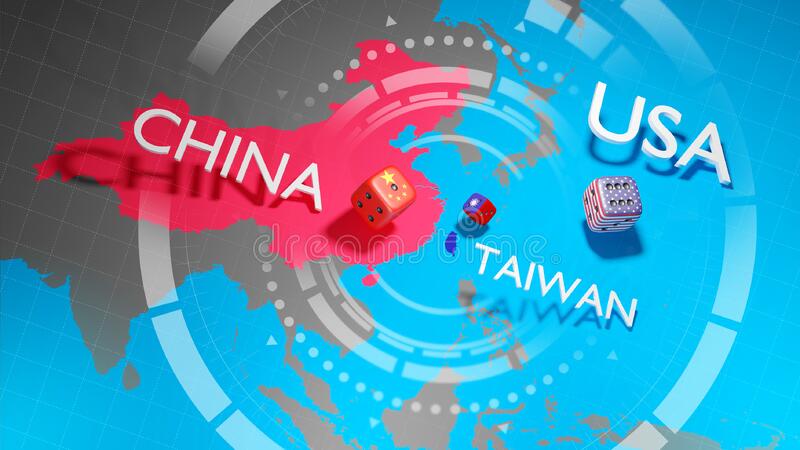
Venezuela reaffirmed its unrestricted adherence to the One China principle and the recognition of Taiwan as an inalienable part of China’s territory

Venezuela Condemns Pelosi Taiwan Trip, Reaffirms ‘One China’ Principle

Taiwan Crisis

Caracas, August 03, 2022 (venezuelanalysis.com) – The Venezuelan Foreign Ministry has condemned US House of Representatives Speaker Nancy Pelosi's two-day visit to Taiwan, calling it a "direct provocation” and a “serious threat” to China's “sovereignty and territorial integrity.”

In a statement issued on Tuesday, Caracas alerted the international community about Washington’s “acts of interference” and recalled that the 1971 United Nations resolution recognizes the People's Republic of China (PRC) “as the true and only legitimate representative of the Chinese people.”

“We reaffirmed our unrestricted adherence to the One China principle and the recognition of Taiwan as an inalienable part of China’s territory,” reads the communique, which highlighted Caracas and Beijing’s strong ties of friendship, cooperation and solidarity as well as their “strategic partnership,” launched in 2001 under the Hugo Chávez government.

On Tuesday, Venezuelan President Nicolás Maduro and Foreign Affairs Minister Carlos Faría likewise celebrated 48 years of diplomatic relations with China in two separate meetings with Cai Wei, the Chinese Foreign Ministry's director for Latin America and the Caribbean.

Beijing has been a crucial Venezuelan ally since the arrival of Hugo Chávez, providing development loans while also becoming one of Caracas’ most important trade partners.  The Asian giant likewise offered key support in the fight against the Covid-19 pandemic.  The Maduro government has recently looked to court Chinese investors to boost the country’s economic recovery, including in recently approved Special Economic Zones.

Pelosi and a congressional delegation landed in Taiwan's capital of Taipei on Tuesday and met with its leading officials amid a tour of Asian countries.  The unannounced visit immediately sparked controversy, with Beijing denouncing “a serious violation of the One China principle and the provisions of the three China-US joint communiqués.”

“[The visit] seriously infringes upon China's sovereignty and territorial integrity. It gravely undermines peace and stability across the Taiwan Strait and sends a seriously wrong signal to the separatist forces in Taiwan,” condemned China's Ministry of Foreign Affairs in a long statement.

The Chinese government stressed that with Pelosi being a high-level authority in the Biden administration, “her visit to and activities in Taiwan, in whatever form and for whatever reason, is a major political provocation to upgrade US official exchanges with Taiwan.”

Following the House speaker's contentious trip, China’s Defense Ministry also announced it would conduct a series of “targeted military operations” around Taiwan to “defend national sovereignty and territorial integrity.”

Taiwan, which is roughly located 100 miles from the coast of southeast China, has been the cornerstone of a dispute between Beijing and Taipei’s US-backed separatist leaders.  The political, diplomatic and military standoff dates back to the 1927-1949 Chinese civil war between nationalist government forces and Mao Zedong's People's Liberation Army, the military branch of the Chinese Communist Party (CCP).

After the communists won in 1949, Zedong founded the People's Republic of China (PRC), including Taiwan.  However, the defeated nationalists fled to the island, renaming it the Republic of China (ROC) and turning it into their seat of government, leading to unsuccessful secessionist efforts.

Following Beijing's diplomatic efforts, on October 25, 1971, the United Nations General Assembly passed Resolution 2758 which recognized the People’s Republic of China as the only legitimate representative of China to the international community.  Since then, 181 countries have established diplomatic relations with Beijing based on the One China principle.

With China quickly becoming a rising power, in 1979 the Jimmy Carter administration broke ties with Taipei to establish diplomatic relations with Beijing and acknowledged the Chinese position that Taiwan is part of mainland China.  That same year, however, Washington also passed the “Taiwan Relations Act” to protect its commercial interests and sell arms to the breakaway island.

Although the White House has insisted that Washington’s position regarding the One China policy has not changed, in May President Joe Biden told the press that the US would defend Taiwan militarily in case of Chinese intervention. House Speaker Pelosi has now added fuel to the fire by disregarding Beijing’s protest over her visit which included a televised meeting with President Tsai Ing-wen.

“Our delegation came here to deliver an unequivocal message: America stands with Taiwan,” said Pelosi before leaving Taipei and heading to South Korea.

On Wednesday, Chinese State Councilor and Foreign Minister Wang Yi said Pelosi's Asian tour was a complete farce to cover for “heinous deeds of violating China's sovereignty under the guise of so-called democracy.”


Source 

Thursday, August 4, 2022

Cuba reaffirms its strict adherence to the “one China” principle and the acknowledgement of Taiwan as an inalienable part of the territory of that country

Cuba reaffirms its unreserved support to the “one China” principle


From 

Conflict China Taiwan
The Ministry of Foreign Affairs of the Republic of Cuba states its firm rejection to the actions aimed at harming the territorial integrity and sovereignty of the People’s Republic of China; condemns interference in its internal affairs, and emphasizes its concern over the increasing tensions and further deterioration of the situation concerning Taiwan as a direct result of the aggressive policy and high military presence of the United States and its allies in the Taiwan Strait, military contacts and regular sale of weapons, actions all that undermine peace and international and regional peace.      


New provocations, disguised as official contacts or high-level visits deliberately pose further dangers.


Cuba reaffirms its strict adherence to the “one China” principle and the acknowledgement of Taiwan as an inalienable part of the territory of that country.   


The United Nations General Assembly, in its resolution 2758 adopted on October 25, 1971, recognized the Government of the People’s Republic of China as the true and sole legitimate representative of the Chinese people.  Today, it has diplomatic relations with 181 countries based on the acknowledgement of the “one-China” principle.    


The purposes and principles of the United Nations Charter and International Law must be respected without selectivity or double standards.


China’s key role as a factor for stability and international balance cannot be disregarded, nor the relevance of its cooperation with developing countries with no political conditions attached.

Havana, August 2, 2022

Source 

Monday, July 25, 2022

For people living in remote areas, where access to paper money can be difficult, Central Bank Digital Currencies, CBDCs could be a game changer - especially in cases of natural disasters

Central Bank Digital Currencies, CBDCs are here to stay
One of the countries taking the lead in 
Central Bank Digital Currencies - CBDCs is The Bahamas.  In October 2020, it issued the Sand Dollar, becoming the world’s first country to create a digital version of its traditional currency.  This represents a direct liability for the central bank and is backed by international reserves.


Central Bank Digital Currencies, CBDCs news

Is There a Future for Digital Currencies Issued by Central Banks in Latin America and the Caribbean?


by  - 


Boosting financial inclusion has long been essential in Latin America and the Caribbean, where more than 200 million people lack access to financial services and large numbers of citizens are unable to open a bank account because of poverty, geography, discrimination, and lack of proper identification.

Alternative systems, however, could be transformative.  They could be crucial in a region where greater financial inclusion can help combat poverty and inequality and promote savings and investment.


The Potential of Central Bank Digital Currencies


One potential solution lies in what are known as central bank digital currencies (CBDCs).  In dozens of countries around the world, central banks are weighing the possibility of issuing their own digital currencies that would not only promote financial inclusion and reduce the costs of financial transactions but preserve the crucial role of monetary authorities in managing the economy.  By creating digital records of transactions, they would bring more citizens into the tax system, aid in the distribution of social welfare payments, and help combat money laundering and other illegal activities that can occur with unregulated cryptocurrencies.  For people living in remote areas, where access to paper money can be difficult, CBDCs could be a game changer, especially in cases of natural disasters.


The Bahamas Takes the Lead


One of the countries taking the lead is The Bahamas.  In October 2020, it issued the Sand Dollar, becoming the world’s first country to create a digital version of its traditional currency.  This represents a direct liability for the central bank and is backed by international reserves.  To use Sand Dollars, businesses and individuals must enroll in an authorized financial institution. Their digital currency is then stored in an eWallet that can be accessed through a mobile phone application or a physical card.  It is safer than cash, easy to use, carries no transaction fees for individuals, allows for faster transactions, and creates a record of income and spending that can be used as supporting evidence for micro-loan applications.


As one of the first official retail digital currencies in the world, the Sand Dollar has had its share of challenges.  The central bank has had to ensure the interoperability between service providers and commercial banks, including the guarantee that the digital currency can always be converted to cash if the need arises.  It has also had to create measures to ensure cybersecurity and data privacy and develop a vast infrastructure of digital support.  Efforts to educate the population on how to use the new currency, as well as to trust it, are ongoing.  The fact that less than 1% of transactions through the central bank currently involve Sand Dollars means that the government still has to meet the challenge of adoption.


New Experiments in Digital Currencies


As of June 2022, several countries had officially launched their CBDCs, with nine of them in the Caribbean—The Bahamas, Jamaica, and all the Eastern Caribbean Currency Union members, except Anguilla, which was in the pilot phase.  Within the region, Belize, Brazil, and Haiti are currently developing CBDCs, while many other countries are in the research phase.


All of this indicates a potentially promising future for digital currencies backed by central banks in a region where boosting financial inclusion is crucial for prosperity.  The fact that CBDCs can remove barriers of access to the financial system, increase the speed of financial transactions, reduce their cost, and give governments a powerful tool to increase tax revenues and make welfare payments, indicates that their day may have come, even if the use of cash, as well as debit and credit cards, is likely to continue.

Source/Comment